
Emergency Tree Removal
Addressing Trees That Pose Immediate Danger
Emergency Tree Removal in Mobile for storm damage, structural failure, or sudden hazard conditions
Mobile's Gulf Coast climate brings sudden wind events, saturated soils during heavy rainfall, and tropical storm systems that uproot trees or snap trunks without warning. Chappell tree service responds to emergency situations where a tree has already failed or is in imminent danger of collapsing onto structures, blocking access routes, or contacting power lines. Emergency tree removal focuses on stabilizing the hazard, securing the site, and removing the threat before additional damage occurs or safety conditions worsen.
What qualifies as a tree emergency depends on immediate risk rather than inconvenience—a tree leaning against your home's exterior wall with roots visibly lifting from the ground, a split trunk hanging over a driveway with fibers tearing audibly, or a large limb resting on utility service lines all represent urgent conditions that cannot wait for scheduled removal. Trees that have uprooted but remain partially suspended in adjacent canopies, trunks with fresh cracks running vertically through the heartwood, and storm-damaged trees with compromised structural integrity also fall into emergency response categories.
Request emergency assessment if you observe fresh tree damage, hear cracking sounds from trunks or limbs, or notice sudden lean changes after weather events.
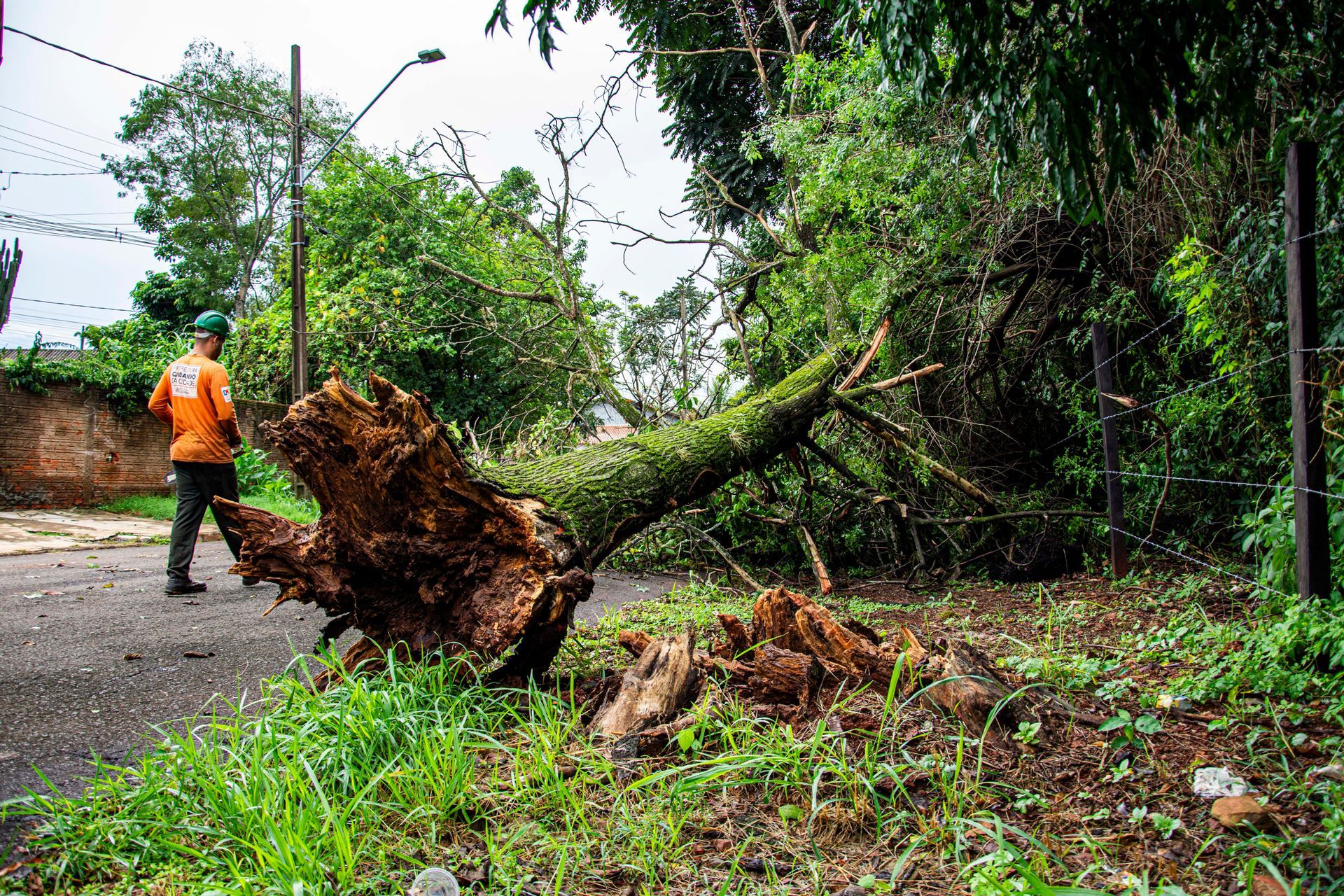

What Emergency Tree Services Include
Emergency response begins with hazard assessment to determine whether the tree can be stabilized temporarily or requires immediate removal, followed by securing the work zone to prevent access by people or vehicles while removal is underway. Equipment mobilization happens quickly, with chainsaws, rigging gear, and sometimes cranes deployed based on the tree's position and the complexity of the failure. The work prioritizes removing the portion of the tree creating the hazard first, then addressing remaining sections once the immediate danger is controlled.
After emergency removal, you notice that blocked driveways are cleared, structures are no longer under load from leaning trunks, and power line contact risks are eliminated. The site is left safe and accessible, though complete cleanup including stump grinding and debris haul-away may be scheduled as follow-up work rather than completed during the emergency response itself. Chappell tree service documents the damage and removal process, which is often necessary for insurance claims when storm events or sudden failures cause the emergency.
Emergency services differ from scheduled removals in timing, scope, and cost structure—response happens outside normal business hours if needed, work focuses on hazard elimination rather than comprehensive site cleanup, and pricing reflects the urgency and risk involved in addressing unstable trees under time-sensitive conditions.
Answers to Frequent Service Questions
Homeowners facing sudden tree failures often ask about response timing, what to do while waiting for crews, and how emergency work is prioritized.
- What should I do if a tree falls on my house during a storm? Evacuate anyone from rooms directly beneath or adjacent to the tree, shut off electricity to affected areas if safe to do so, and contact emergency tree removal services immediately rather than attempting to move or cut the tree yourself.
- How quickly can emergency tree removal crews respond in Mobile? Response times vary based on crew availability and the volume of storm-related calls, but emergency situations involving structural damage or active safety hazards receive priority scheduling, often with same-day or next-day response depending on conditions.
- Why choose Chappell Tree Service for emergency tree work? We bring crane and climbing capabilities to handle complex failures, maintain equipment and trained crews for rapid deployment, and understand the documentation requirements for insurance claims that follow storm damage or sudden tree collapse events.
- Will emergency tree removal include cleanup and stump grinding? Emergency response focuses on removing the hazard and securing the site—debris cleanup, log removal, and stump grinding are typically scheduled as follow-up services once the immediate danger is addressed and weather conditions stabilize.
- What if the tree is touching power lines? Do not approach trees in contact with power lines, and contact your utility provider immediately to de-energize the lines before removal work begins, as live electrical contact creates lethal hazards that must be controlled before tree crews can safely operate.
When tree failures threaten your property or safety, Chappell tree service provides the equipment, experience, and response capacity to address the emergency and restore site safety. Call for immediate assessment when hazardous conditions develop or damage has already occurred.